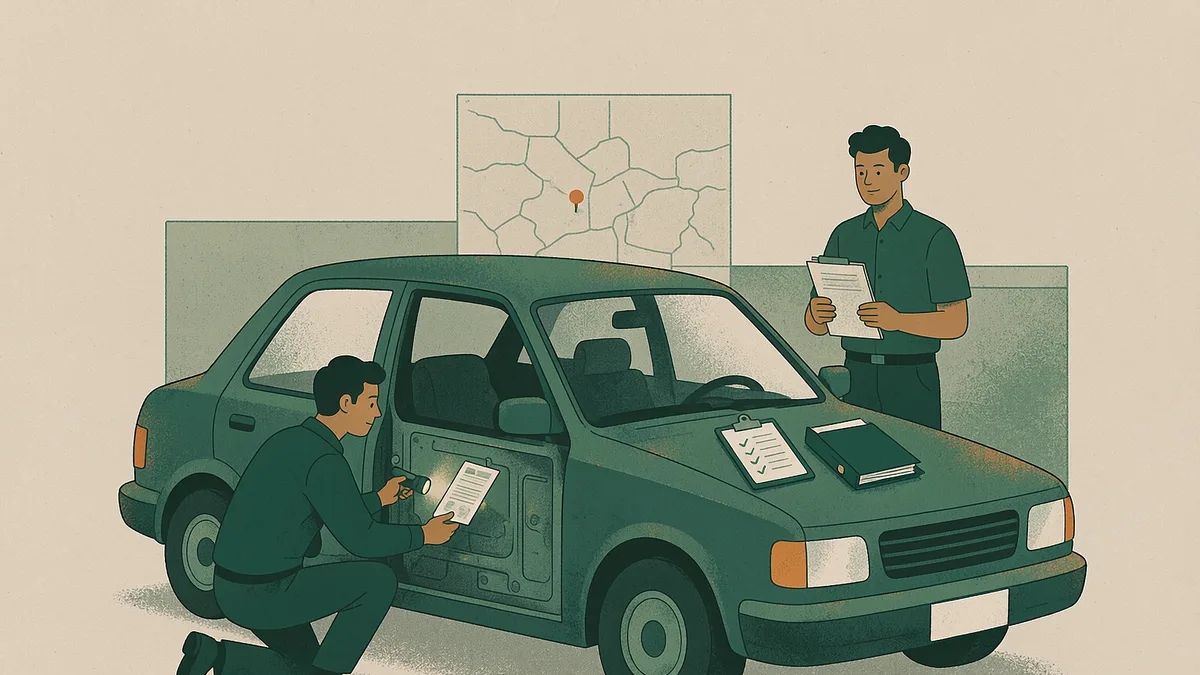
A used car advertised in Lahore may be registered in Multan, Quetta or Peshawar, and that single fact changes the work of buying it. The record sits in another office, the file may be a folder of paper rather than a smart card, and the transfer cannot be completed at the counter nearest the buyer. None of that makes the vehicle a bad purchase. It does mean the checks have to happen before payment, because the problems that surface later are usually paper problems that the buyer has to solve from a distance. This guide sets out what to confirm, in what order, and what should stop the deal.
What the record shows and what it hides
A registration record answers a narrow set of questions. It shows the registered owner, the make and model, the engine and chassis numbers, the colour, the engine capacity, the registration date and the tax position. It does not show accident history, the quality of a repair, the number of previous owners, or whether the file is complete. A clean record means the vehicle is known to the department and nothing on the record contradicts the vehicle in front of you.
That is enough to establish identity, and identity is what the transfer depends on. A vehicle with a matching record can be transferred. A vehicle with a record that has been altered, or a file that has lost pages, cannot be, and the buyer discovers it when the application is refused.
The district on the papers
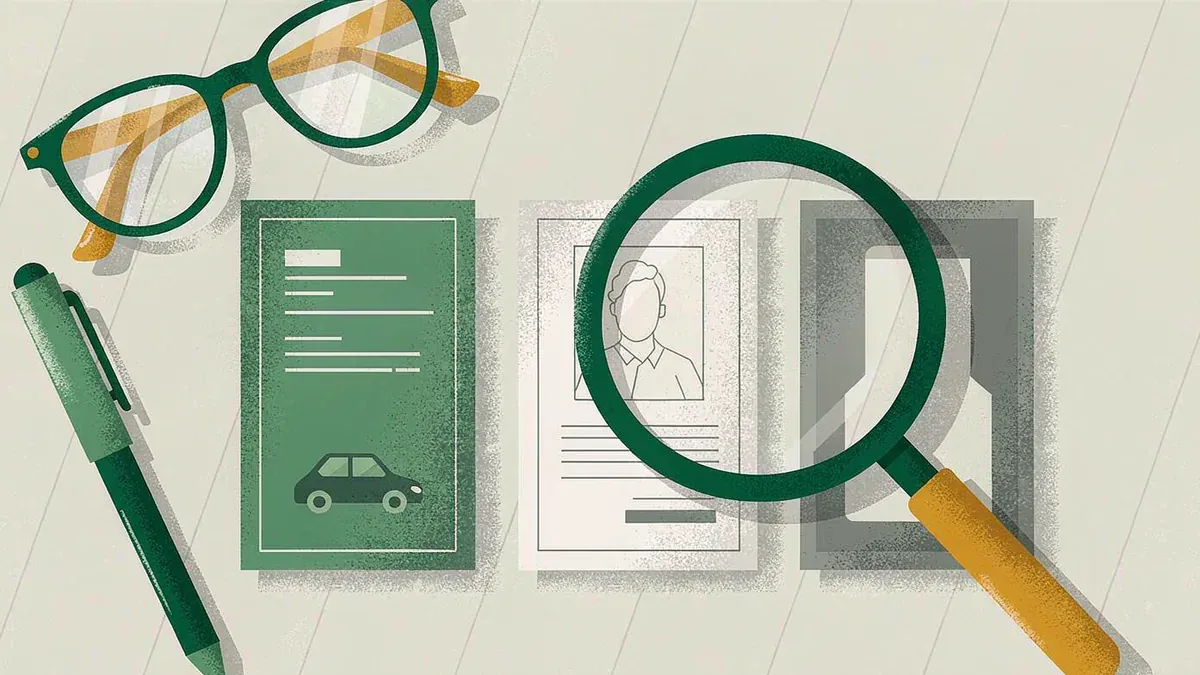
Read the registration book or smart card before you read the advertisement. The registering office is printed there, and the number plate series usually follows the district or region that issued it. If the two disagree, ask why.
Four checks sit on the papers:
| Check | Where to look | A bad result means |
|---|---|---|
| Registering office | Registration book or smart card | Transfer will need the file moved from that office |
| Owner name | Record against the seller’s CNIC | Seller may not be the person who can transfer |
| Engine and chassis numbers | Book against the stamps on the vehicle | Identity problem, not a paperwork delay |
| Tax position | Record or the provincial portal | Arrears will be added to the buyer’s challan |
A seller who lives in your city but whose vehicle is registered elsewhere is common, and not a warning by itself. What matters is whether the seller can produce the file and the NOC, and whether the name on the record is the name on the CNIC in front of you.
Ask for the NOC and the file before you pay
An out-of-district transfer needs the cooperation of two offices, and the buyer’s office will want proof that the old one has no objection. Islamabad’s vehicle transfer page lists what an out-of-district vehicle requires: an NOC from the excise department that holds the record, a copy of the registration book, a copy of the complete registration file, the original file where it has been returned, and proof of residence in the capital.
The same shape applies elsewhere, with local variations. Treat the NOC as a condition of the sale. Ask the seller to obtain it before the payment clears, or to sign a written undertaking that the price is refundable if the NOC is refused.
Three documents deserve a close look:
- The complete file. Count the pages against the file the seller hands over. Missing invoices, tax receipts or inspection reports are the usual reason a case stalls.
- The bank NOC. If the vehicle was financed, the bank or leasing company has to release its interest. A registration book that still shows a lien cannot be transferred without it.
- The tax receipts. Token tax is collected by the province that registered the vehicle, so a receipt from another district is normal, and a gap in the receipts is not.
If the seller cannot produce the file because it is held by a bank, a dealer or a relative, establish who holds it and when it will be released. A promise to send it later is how buyers end up with a car they cannot transfer.
The provinces handle the out-of-district case differently. Punjab processes the transfer at the buyer’s district office and through ePay, with biometric verification from both sides. Sindh keeps the file with the regional directorate that registered the vehicle, so a sale across directorates means moving papers between Karachi, Hyderabad, Sukkur, Larkana or Mirpurkhas. Khyber Pakhtunkhwa works through the district motor registering authority. Balochistan may ask for a local attestation or a different address proof. Islamabad publishes the out-of-district list quoted above, including the NOC and the residence proof.
Match the numbers on the vehicle
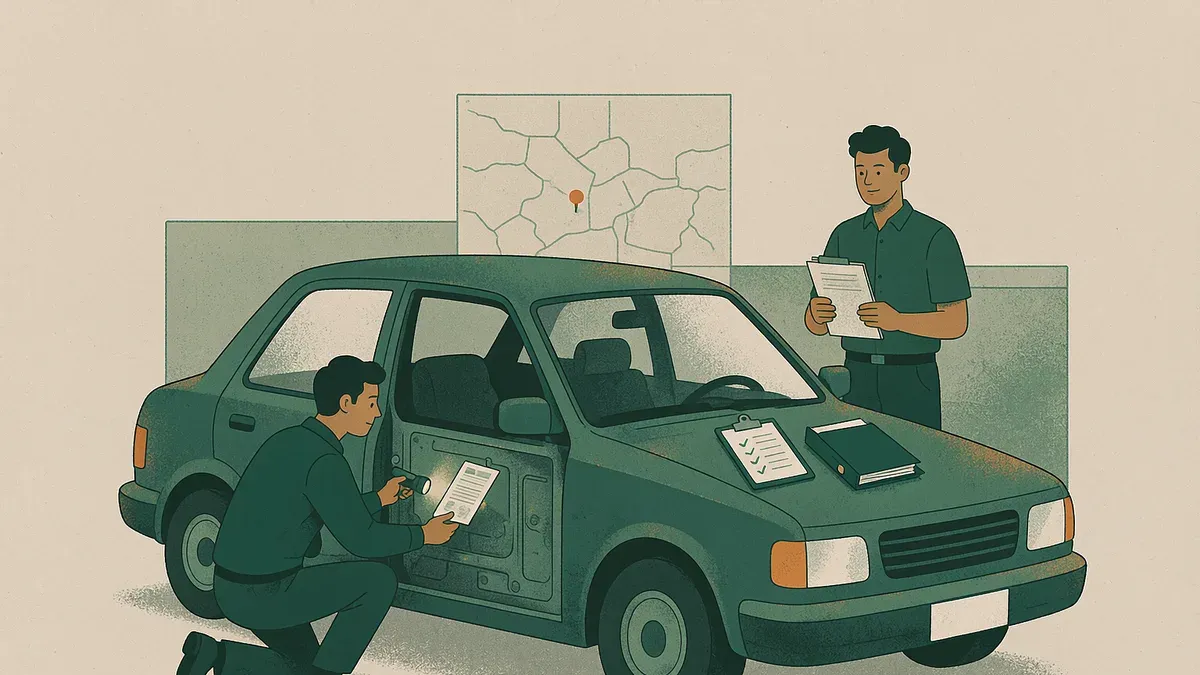
The record is only useful if the vehicle matches it. Do this check in daylight, with the vehicle clean, and compare the stamps with the book rather than with a photocopy.
- Chassis number. On most cars it is stamped on the firewall or the inner wing under the bonnet, and sometimes on a plate visible through the windscreen. Look for grinding, welding, filler or fresh paint around the stamping.
- Engine number. It is stamped on the block. A number that is hard to read because of oil and dirt is normal. A number that has been machined flat and restamped is not.
- Colour and body. A respray is ordinary. A colour that differs from the record, a replaced panel with a different shade, or a body shell that does not match the model year deserve an explanation.
- Plates and glass. Check that both plates match the record and that they are the official computerised type, with no cover or altered spacing.
A single digit that differs between the book and the stamp is a stop signal. It can be a typing error made at first registration, which the department can correct with an application and an inspection. It can also be a replaced engine that was never recorded, or a vehicle assembled from two. The buyer cannot tell which from the roadside, so the correction has to happen before the sale or the price has to reflect the risk.
When to walk away
Some problems are worth solving and some are not. The list below covers the ones that make a sale hard to finish.
- No NOC and no clear route to one. Without it, the buyer’s district will not open the case, and the seller’s district has no reason to hurry.
- An engine or chassis number that does not match the record and cannot be explained by a documented correction.
- A seller who is not the registered owner and cannot show a transfer, an inheritance certificate or a court order.
- A file held by a bank with no release letter and no date for one.
- Token tax arrears that are large enough to wipe out the saving on the price.
- A vehicle that has been driven on an open transfer letter for years, with the record still in an earlier owner’s name. Each extra name in the chain is another person who has to sign.
An out-of-district purchase can be a straightforward deal. It becomes a good one when the buyer checks the record, the file and the stamps before the payment, and treats the NOC as part of the price.