A choice number is a registration mark you pick rather than one the series hands you. People chase them for a name, a repeated digit, a low number or a combination that reads well, and the work that follows is ordinary registration work with one extra stage: the mark has to be allotted to your vehicle before you may mount it. This guide covers how allocation runs in Punjab, where the system is most developed, what the other provinces do, and the points where applicants lose money or time.
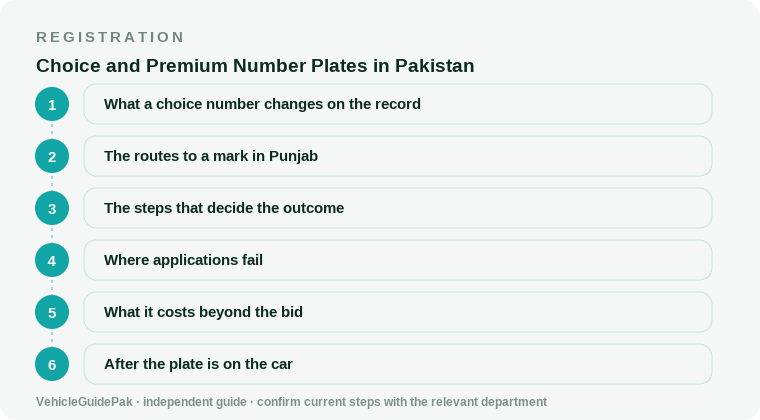
What a choice number changes on the record
The registration mark identifies the vehicle in the excise record. It does not change the owner, the chassis number, the engine number or the tax history. A car with a personalised plate is verified, taxed and inspected exactly like a car with a dull series number.
The mark is tied to the vehicle. In Punjab the published auction terms limit an allotted mark to the vehicle held under the applicant’s Automated Identification Number, and the mark cannot be shifted to a vehicle owned by somebody else. That single rule decides most of the resale questions people ask after they win.
The record matters more than the plate on the bumper. A plate that does not match the registration certificate is a defective document at a checkpoint and a problem at transfer, whatever the auction receipt says.
The routes to a mark in Punjab
Punjab sells attractive marks in two main ways, both online. A series auction releases the desirable numbers from a new series, such as low numbers and repeats. The designed plate scheme lets an applicant type a combination of letters and digits, and the department screens each request before it reaches the bidding stage, rejecting anything resembling a government mark, duplicating an existing plate, or carrying an obscene or insulting reading. Numbers outside the attractive list are usually available during the series at a fixed fee, first come first served, and the leftover auction marks may be offered at the reserve price or blocked once the series closes.
| Route | Who decides | What you pay | Timing |
|---|---|---|---|
| Series auction | Excise auction system | Participation fee plus winning bid | Fixed bidding window per series |
| Designed plate | Department screening, then bidding | Higher participation fee plus winning bid | Screening decision, then a bidding period |
| First come, first served | District counter or portal | Fixed fee for the series | While the series is open |
| Marks 1 to 9 and 786 | Committee constituted for the purpose | Reserve price and bid | Separate from the portal auction |
The steps that decide the outcome
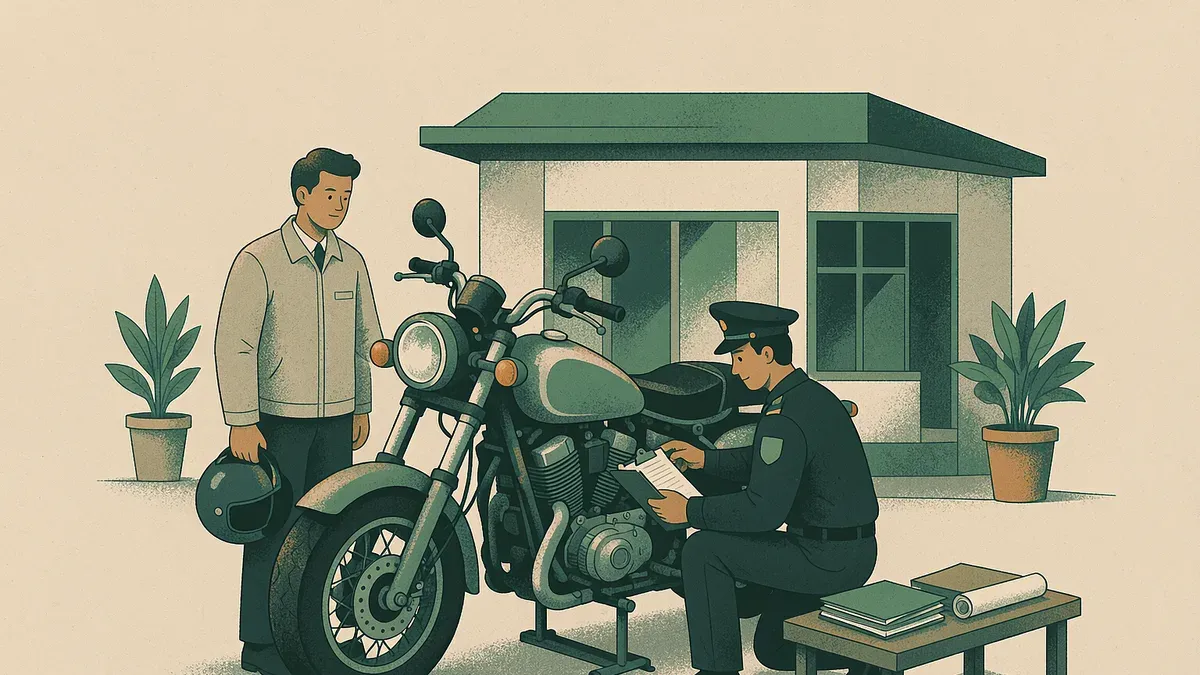
- Clear the vehicle first. Auction terms bar a vehicle with token tax arrears or a suspended or cancelled registration, and the portal checks the record before it lets you continue. Pay the arrears and keep the challan.
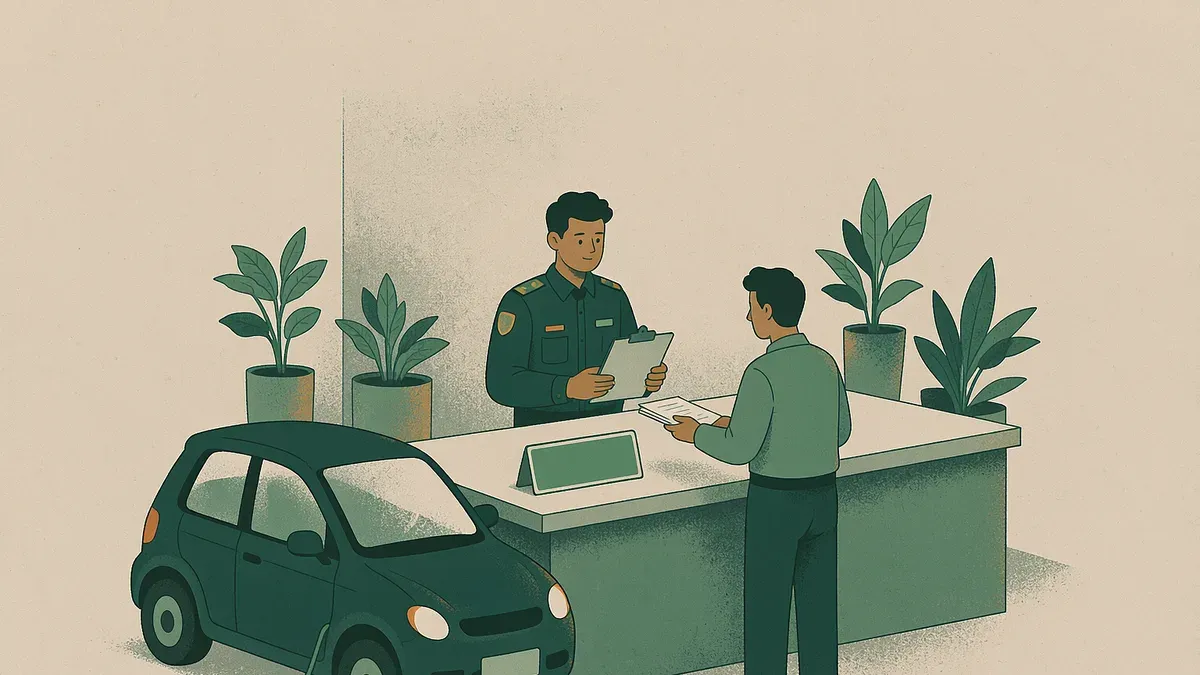
- Register as a bidder with your CNIC, or the company’s NTN where the vehicle belongs to a firm. Add the registration number and the registration date exactly as printed on the smart card, because the system pulls the owner details from that entry.
- Pay the participation fee. It is charged per application and is not returned if you lose, so decide which mark you actually want before you file.
- Wait for the screening. The department reviews the combination before bidding opens. A refusal can be appealed to the Director General within the period stated in the terms.
- Bid inside the window. Bids move in fixed steps, so settle your ceiling before the window opens and leave the final minutes for a decision you have already made.
- Pay the balance through the payment slip before it expires. A winner who misses the deadline loses the mark and can lose the deposited amount as well.
- Get the mark entered on the registration record, then fit the plates. Until the registration certificate carries the mark, displaying it is not lawful.
Where applications fail
The common failures are ordinary. A vehicle with an unpaid token tax period is refused before bidding. A combination that duplicates an existing mark is rejected in screening. The applicant’s name does not match the registered owner, which happens when a father bids for a car registered to a son, or when a company bids using a director’s CNIC. A demand draft or deposit falls short of the reserve price. A winner pays the bid but never completes the registration, and then drives on plates the record does not support.
Each of these ends the same way: the fee is spent and the mark is not on the car.
What it costs beyond the bid
The bid is one line. The rest is the ordinary registration cost of the vehicle: registration fee, advance tax where it applies, token tax for the period, plate manufacturing and the smart card. Those figures are set by notification, and the counter or the provincial payment app is the only reliable place to read the current amount. Punjab collects most vehicle fees through ePay Punjab, which issues a payment slip that can be paid at a bank, an ATM or a mobile wallet.
Ask for the itemised challan before paying. A single lump sum hides which charges are refundable, which are not, and which belong to the vehicle rather than to the plate.
Islamabad, Sindh, Khyber Pakhtunkhwa and Balochistan
Islamabad handles special numbers through a fee schedule rather than an auction. The registration page of the ICT Excise and Taxation Department lists a special number fee as part of the registration formula, with the schedule available at the information counter. The vehicle still goes through physical inspection and Form F, so the mark is entered during registration rather than added later.
Sindh handles premium marks through the provincial excise system, where the challan is paid by PSID and the mark is entered at registration. Khyber Pakhtunkhwa has been replacing older plates with a universal plate and smart card system, announced on the provincial excise site in October 2026, and its registration fee is a percentage of vehicle value rather than a flat charge. Balochistan handles allotments at district offices, so a phone call before travelling is worth more than any online guide.
None of the four follows Punjab’s auction calendar. A mark available in Lahore may be blocked, reserved or simply not offered in Peshawar.
After the plate is on the car
Keep three papers together: the allotment or auction result, the payment receipt, and the registration certificate or smart card showing the mark. When you sell, the buyer’s verification will show the mark and the owner, and any mismatch between the plate and the record will surface at that point.
If you plan to keep the mark for a future vehicle, ask the excise office in writing before the sale is agreed. Retention rules are narrower than buyers expect, and in Punjab the terms tie the mark to the vehicle under which it was allotted. A promise made to a buyer on the strength of a verbal answer at the counter is the kind of detail that turns into a dispute after the money has changed hands.