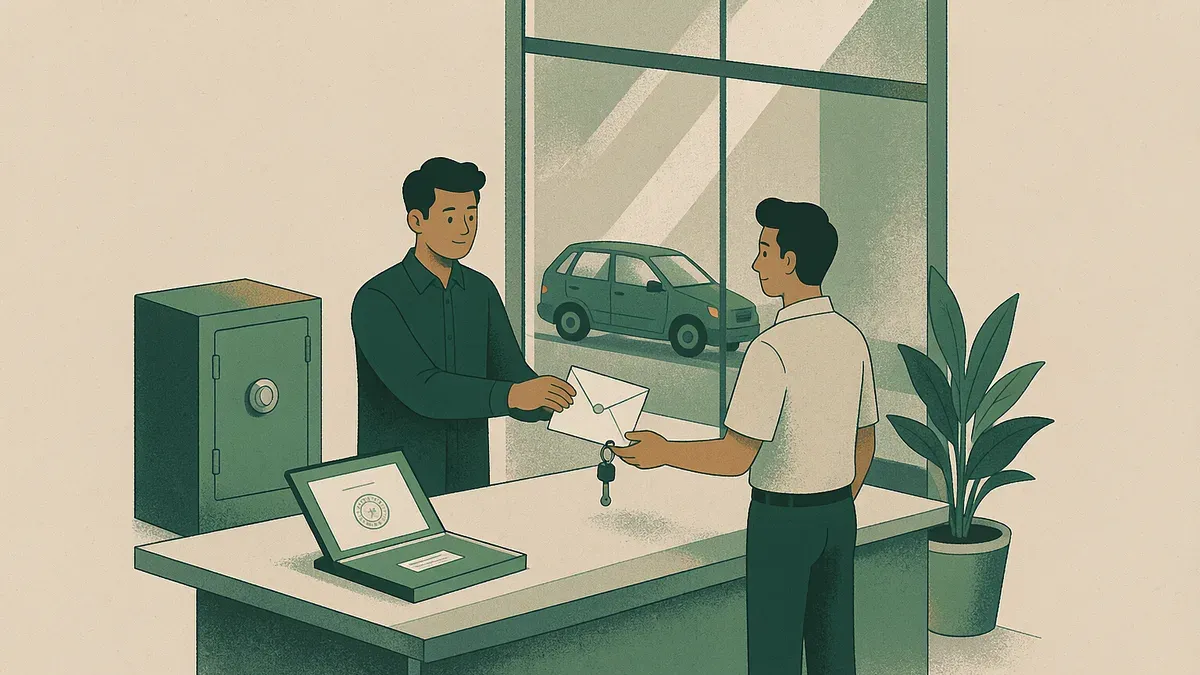
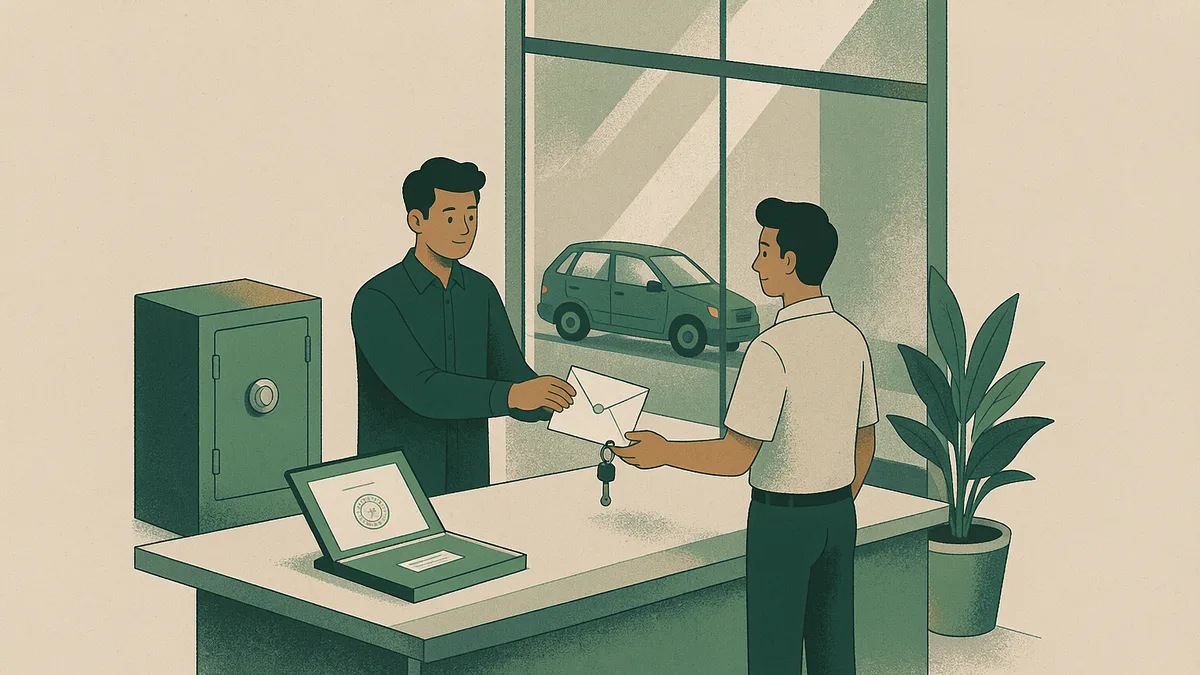
A car bought on bank finance is registered with the financier’s interest recorded against it, and that entry usually outlives the loan. The last instalment closes the account but leaves the bank’s name on the excise record until the owner files a separate application to remove it. This guide covers the clearance letter, the counter step and the record check, and explains why the gap between paying off a loan and clearing the file costs sellers money years later.
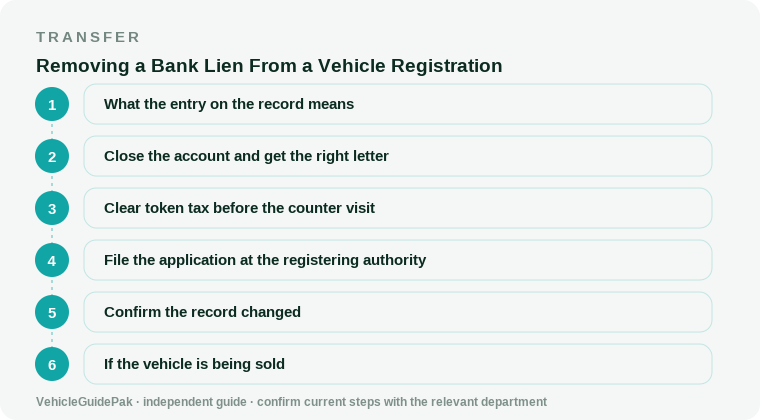
What the entry on the record means
The vehicle is registered in the borrower’s name, with a hire purchase agreement or hypothecation noted against it. The bank or leasing company appears as the party with a financial interest. That note is why a financed car cannot be sold to a stranger while the loan runs: the counter will not complete a transfer that leaves the financier’s claim unresolved.
Terminology changes with the province. Punjab files the step as termination of a hire purchase agreement. Islamabad asks for a no objection certificate or a transfer letter from the bank or leasing company, as its transfer page states. Sindh and Khyber Pakhtunkhwa handle it at district offices under their own forms. The paperwork is similar, and the sequence below holds in all of them.
Step 1: close the account and ask for the right letter
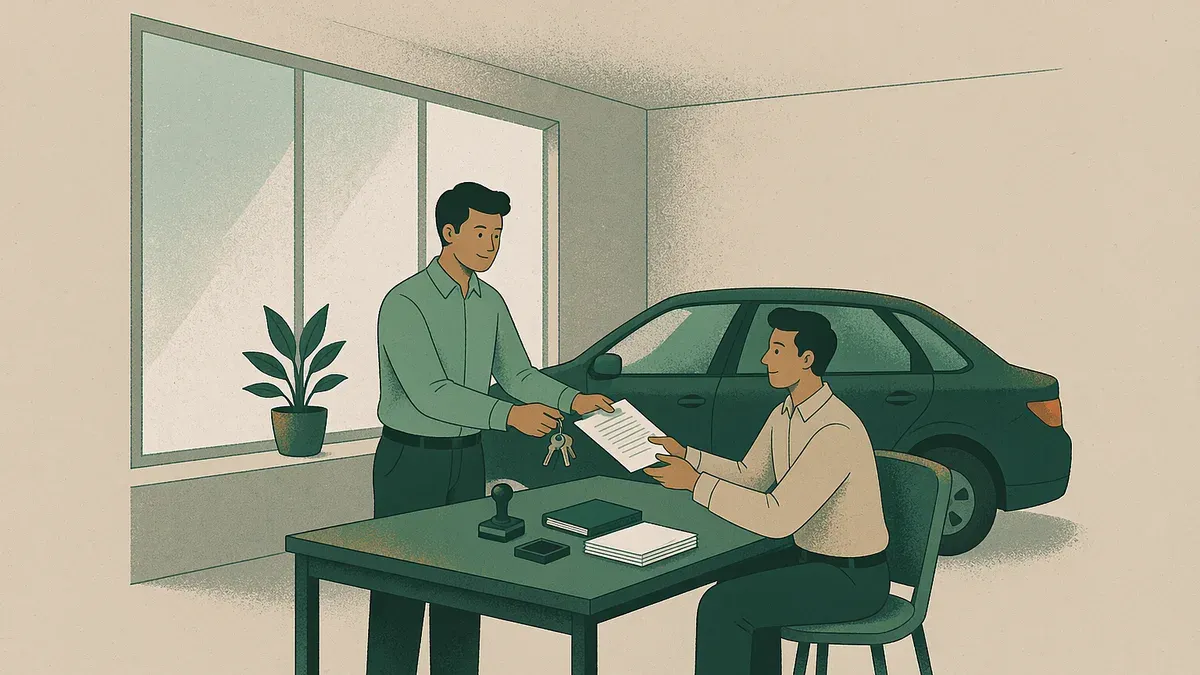
Ask for the clearance letter as soon as the final instalment clears, not months later when the file has moved to another department. A branch that has merged, a relationship manager who has left and a loan record archived off-site all turn a same-day request into a fortnight of calls.
The letter has to identify the vehicle as well as the borrower. Read it before you leave the branch and check four fields against the registration certificate: registration number, engine number, chassis number and the borrower’s name as it appears on the record. A single wrong digit in the chassis number is the most common reason a lien application is sent back, and the correction has to come from the bank rather than the excise counter.
Ask which document the local excise office accepts: some want a no objection certificate, some a loan clearance certificate, and some a letter addressed to the motor registering authority. A certificate addressed “to whom it may concern” is often refused.
Step 2: clear token tax before the counter visit
When a hire purchase agreement is terminated in Punjab, the counter asks for the original registration certificate showing token tax paid. Arrears stop the file even when the bank letter is perfect, and the owner then makes a second trip after paying a challan that could have been settled online the same evening.
Check the token tax position through the provincial portal or payment app first. Punjab collects through ePay Punjab, Sindh through its own PSID system, and Islamabad through the Pak App and the excise portal. Pay any open period, keep the receipt, and take a printed copy with you.
Step 3: file the application at the registering authority
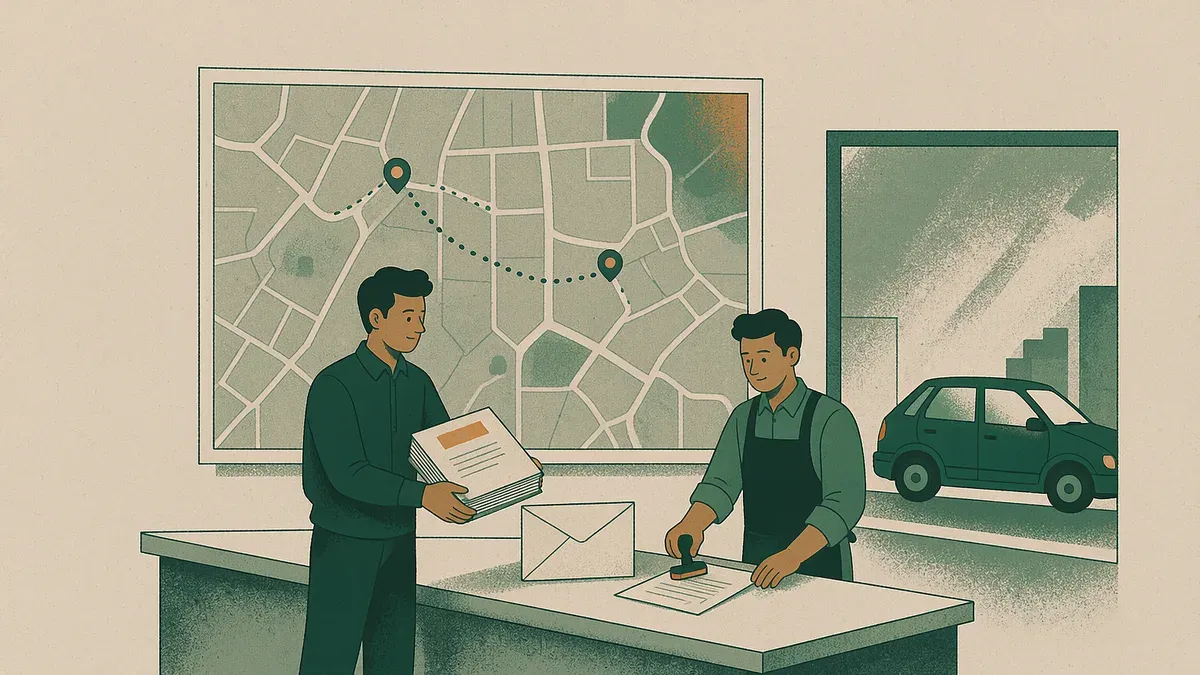
The file goes to the district excise office that holds the vehicle record. The bank’s branch and the dealer cannot process it. In Punjab the counter typically asks for an application on plain paper, the lessor’s clearance letter, a copy of the owner’s CNIC and the original registration certificate, plus the original registration file where the vehicle carries a file rather than a smart card.
| Paper | Where it comes from | What the counter checks |
|---|---|---|
| Application to terminate the agreement | Owner, on plain paper | Name, CNIC, registration number, chassis number, financier |
| No objection or clearance certificate | Bank or leasing company | Vehicle identified, loan closed, letter addressed to excise |
| CNIC copy | NADRA | Matches the name on the registration record |
| Original registration certificate or smart card | Excise office | Token tax paid up to date |
| Original registration file | Excise office | Only where the vehicle is on the file return scheme |
| Receipt for any counter fee | Excise office | Kept for follow-up |
Islamabad lists the processing fee for a transfer at Rs 1,200 to Rs 3,000, paid at the National Bank counter, with a stated processing time of four weeks. A lien removal runs through the same office and a similar queue, so plan on weeks rather than days and avoid booking a sale on the strength of a submission receipt.
Step 4: confirm the record changed
The application receipt is not proof that the record is clean. Check the vehicle on the provincial system after the stated processing time and look for the financier’s name. If it still appears, take the receipt back to the office and ask for the case number. Waiting a few extra days after submission is normal. A month of silence means the case has stalled.
When the removal is processed, ask whether a revised smart card is issued. A record that is clean in the database but still shows the bank on a printed card will cause the same argument at the next transfer, and the card is what a buyer will photograph.
If the vehicle is being sold
Two routes work. The owner can clear the lien first and then sell a clean vehicle, which is simpler and commands a better price. Or the buyer can pay the outstanding balance directly to the bank, take the clearance letter in the owner’s name and complete the lien removal and the transfer together. The second route needs all three parties in contact and a bank that will issue the letter against a third-party deposit.
Either way, advance tax is collected again on transfer where the vehicle is within five years of first registration, and Islamabad applies ten per cent depreciation for each year since registration. A seller who has just cleared a loan sometimes forgets this cost and finds the final figure higher than expected.
What goes wrong, and what it costs
The failures are predictable. The clearance letter names a different chassis number and the file is returned, costing a bank visit and a second excise visit. The owner paid off the loan years ago and the bank has archived the record, so the letter takes weeks. Token tax arrears hold the file after the bank has done its part. The owner sells on the strength of a verbal assurance that the lien will be removed, and the buyer’s verification still shows the financier on the day of the transfer.
The fee is the smallest part of the cost. A vehicle that shows a live lien is harder to sell, is refused by many buyers’ banks when they assess finance, and gives the buyer a reason to renegotiate the price after the inspection.
Clear the lien in the month the loan closes, keep the letter and the receipt with the registration certificate, and check the record before the car is advertised. That order keeps the file simple and keeps the sale at the price you agreed.