
Registration
How Long Vehicle Registration Takes in Pakistan: Realistic Stage-by-Stage Timelines
Key takeaways
- Registration takes a few smooth days but several weeks once a stage stalls.
- Plate production and smart card issuance usually outlast the approval itself.
- Number mismatches and unpaid dues cause the slowest common delays.
- Track progress with the acknowledgement number rather than waiting for a call.
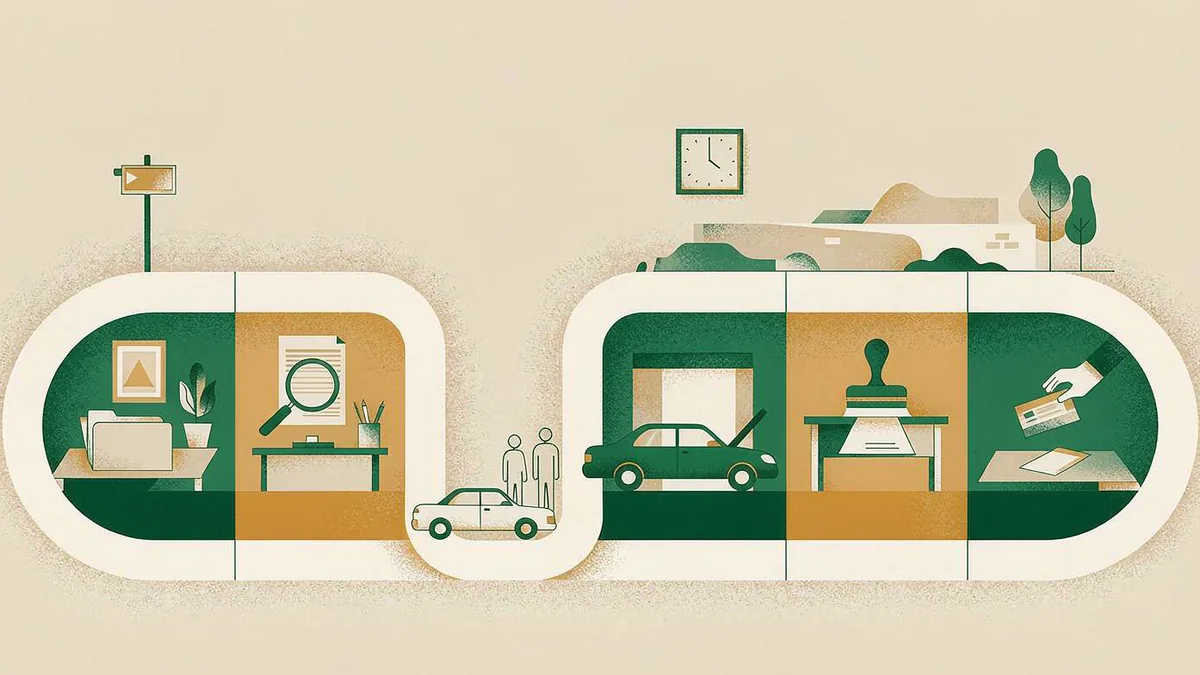
Registering a vehicle in Pakistan takes a few working days in the smoothest cases and several weeks when a stage stalls, because the process runs through separate offices that do not all move at once. Paperwork you control is fast; verification, inspection, plate production and card issuance depend on the registration authority's own queues. Knowing which stage your file is actually sitting in is what turns a vague wait into a manageable one.
The stages and realistic timelines
| Stage | What happens | Realistic duration |
|---|---|---|
| Document gathering | Sale invoice, CNIC, address proof, insurance, seller's transfer paperwork | 1 to 3 days for most buyers |
| Application submission | Form lodged with the registration authority and an acknowledgement or token issued | Same day once you attend |
| Fee generation and payment | Payment slip or PSID raised against the vehicle, settled at a listed channel | Same day to 2 days |
| Verification of particulars | Engine and chassis numbers, seller record and dues position checked | 2 to 7 working days |
| Physical inspection, where required | Vehicle presented for number matching and condition check | Slot availability, often 3 to 10 days |
| Approval and entry in the register | The record is created and a registration number assigned | 2 to 5 working days after inspection |
| Plate production and fitting | Permanent number plate made to the assigned number | 3 to 10 working days |
| Book or smart card issuance | Registration book issued, or smart card printed and dispatched | Smart cards commonly 2 to 4 weeks |
These ranges overlap in some provinces and stretch in others. The key point is that the plate and the card often arrive after the registration record itself is created, so the last leg of the wait is production, not decision-making.
What actually causes delays
Almost every delay falls into one of a handful of causes, and nearly all of them are avoidable:
- Incomplete paperwork — a missing address proof, an unclear invoice, or a seller signature that does not match the record.
- Unpaid dues on the vehicle — token tax arrears or an outstanding challan attached to the registration number will hold the file until settled.
- Mismatched engine or chassis numbers — a single wrong digit forces reverification, which is the slowest common problem.
- Inspection slot shortages — where inspection is required, the queue for slots rather than any decision about your vehicle sets the pace.
- Incomplete transfer from a previous owner — a vehicle still recorded against an earlier owner has to be regularised before a new record can open.
- Plate or card production backlog — outside your control and outside the registering office's control too.
- Holidays and peak periods — the weeks around budget changes and public holidays slow every stage.
Delays are administrative, not personal. Deal with them by producing documents and settling dues promptly rather than by attending repeatedly, and ask specifically which stage the file is held at so you know which of these causes applies.
How to check progress
Start with the acknowledgement or token number you were given at submission, since that is the reference the office will ask for and the one most status checks are keyed to.
- Check the status against your acknowledgement number through the online registration portal, where your province offers it.
- Verify whether any challan or token tax arrears are attached to the vehicle registration number, and settle them early.
- Attend the registering office with your CNIC and acknowledgement and ask which stage the file currently sits at.
- For the smart card specifically, ask whether it has been printed and dispatched, since collection and dispatch are separate steps.
- Use the dealer or agent, if you appointed one, and ask for the acknowledgement number so you can check independently.
When a stage has stalled
If the file has not moved past one stage beyond the ranges above, ask the registration authority what is outstanding and confirm the vehicle has no unpaid dues attached to it. If a number mismatch is the issue, have the dealer or seller correct the invoice, since the authority will not alter the record to suit a document that was wrong from the start.
Take your acknowledgement number and check the current stage today, rather than waiting for a call that may never come. Note every deadline that applies to the vehicle while you wait, including any temporary registration window still running.
Keep reading
New Vehicle Registration Process in Pakistan: Step-by-Step
Registering a new vehicle in Pakistan runs from sale invoice to number plate in six clear steps. See the right order and who files each part.
Documents Required for Vehicle Registration in Pakistan
Vehicle registration needs CNIC, sale invoice, origin papers, forms and a paid slip. See what each proves and the remedy when one is missing.
Temporary vs Permanent Vehicle Registration in Pakistan: What Each One Allows
A temporary registration lets you drive briefly while the permanent record is prepared. Learn validity, conversion steps and expired registration risks.