
Verification
How to Read a Pakistani Number Plate: Region, Series and Number
Key takeaways
- A plate reads as region marker, then series letter, then the individual number
- The region marker tells you which provincial database to search, not who owns the car
- Personalised plates carry no special status and are verified the same way
- Plate, registration book and online record must all agree before you pay
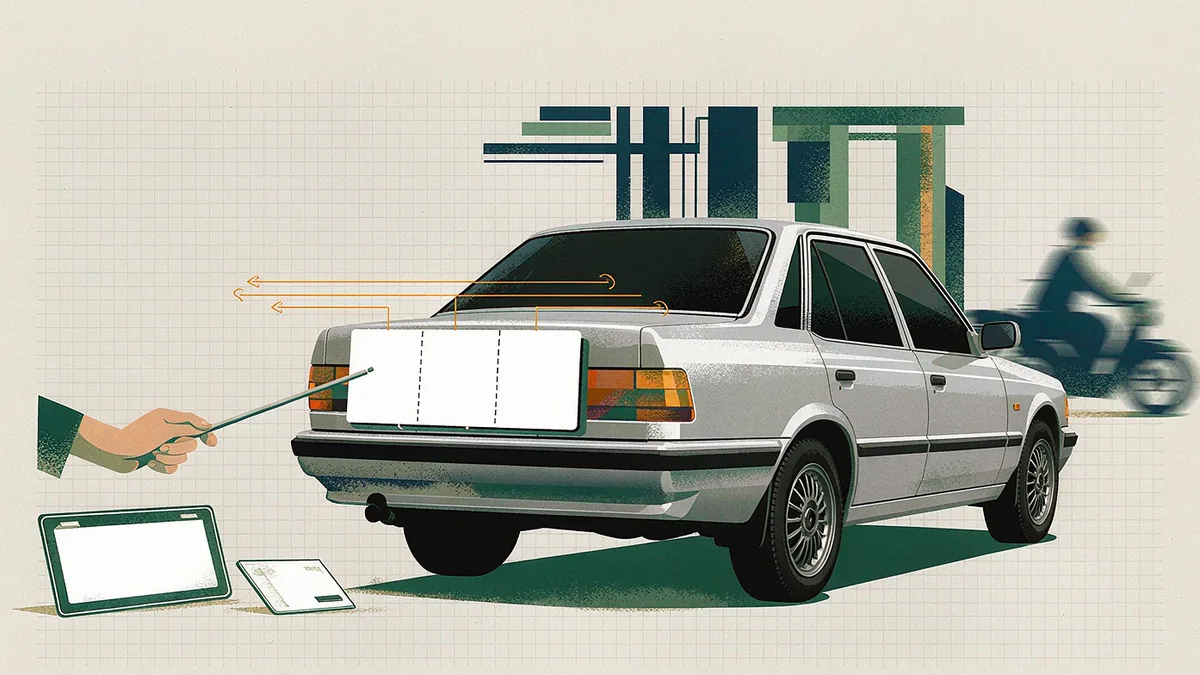
A Pakistani number plate is built from three parts: a region marker that points to the registering district or province, a series letter or letters, and the individual number. Reading those parts correctly tells you roughly where and when the vehicle was registered, and gives you a quick way to spot a plate that does not match the paperwork. It does not, on its own, tell you who owns the vehicle.
The three parts of a plate
The standard layout runs left to right. The first element identifies the registering region, either through a leading letter or through the district name printed along the bottom of newer plates. The second element is the series, a letter or pair of letters that advances as each block of numbers is used up. The third element is the number itself, usually four digits on older plates and up to four on current ones.
So a plate is read as region, then series, then number. When you write a registration number down for a verification lookup, copy all three parts in that order, including any dash, because dropping the series letter is the most common reason a search returns nothing.
Region codes and what they mean
On older plates the leading letter generally indicated the district where the vehicle was registered, and motorcycles and cars in the same district shared that marker. On newer plates the district or city name is usually printed at the bottom of the plate in English and Urdu, which removes most of the guesswork.
Code schemes differ between Punjab, Sindh, Khyber Pakhtunkhwa, Balochistan and the Islamabad Capital Territory, and several provinces have changed their formats over the years. Treat the region marker as a hint about where the vehicle was registered, not as proof, and confirm the actual record through a verification lookup.
The practical use of the region marker is choosing where to search. A plate showing a Punjab district means the record sits in Punjab's database, not in Sindh's, and a search run on the wrong provincial portal will return no result even though the vehicle is perfectly legitimate.
The series letter and what it tells you
Series letters are issued in sequence. When one block of numbers is exhausted, the registration authority moves to the next letter. That means the series gives you a rough sense of age: a vehicle on an early letter was registered before one on a later letter in the same region. It is a rough guide only, because different vehicle classes may run through separate series in the same district.
The series also matters when comparing documents. If the plate reads one series and the registration book reads another, one of the two is wrong, and the discrepancy needs to be resolved before a sale goes ahead.
Standard, personalised and official series
| Plate type | How to recognise it | What to watch for |
|---|---|---|
| Standard issue | Sequential series letter and number, district name on newer plates | The number should match the registration book and the verification record exactly |
| Personalised | A chosen sequence of letters or digits, often a name, initials or a repeated number | Allocated through a separate application with an additional charge set by the province; the chosen number must still appear in the registration book |
| Government and departmental series | Plates issued to government bodies, often carrying a department marking or a distinct series | These vehicles are recorded against a department, not a private individual, which affects how they can be transferred |
| Public transport and commercial | Often a distinct colour scheme or class marking alongside the number | Usually requires a current fitness certificate in addition to token tax |
Personalised plates are the one type that regularly causes confusion for buyers. A personalised number is still just a registration number: it carries no special status, and the ownership record behind it is checked in exactly the same way as any other vehicle.
Matching the plate to the record
Work in a fixed order when you inspect a vehicle. Read the plate in daylight and write down the full number. Enter it on the provincial vehicle verification portal and confirm that the returned engine and chassis numbers match the stampings on the vehicle and the entries in the registration book or smart card. Finally, check that the name on the record is the person standing in front of you.
If the plate, the book and the online record all agree, you have a consistent set of documents to work from. If any one of the three disagrees, stop and resolve it at the provincial excise and taxation department before you pay anything or sign a transfer.
Keep reading
How to Verify Vehicle Ownership Online in Pakistan
Verify vehicle ownership online by registration number: see what the provincial lookup returns, which fields to match, and what the result means.
How to Verify a Used Car Before Buying in Pakistan
Before you pay for a used car: documents, engine and chassis number matching, verification lookup, token tax status, seller CNIC and sale letter.
Which Documents and Numbers You Need Before a Vehicle Verification
Vehicle verification needs your registration number, owner CNIC and chassis number. See why each is required and what to do if one is missing.