
Transfer
Vehicle Transfer Deadline, Late Fee and Penalties in Pakistan
Key takeaways
- The deadline runs from the date of sale, so date the sale letter accurately.
- Late fees are set by each province and are usually charged per period of delay.
- Sellers keep challan and token tax liability; buyers cannot prove ownership.
- If the period has passed, pay the charge and complete the transfer anyway.
Pakistan's provincial transfer rules set a deadline for moving a vehicle into the buyer's name after a sale, and a late fee or penalty applies once that period has passed. The exact period and the way the penalty is calculated differ between Punjab, Sindh, Khyber Pakhtunkhwa, Balochistan and the Islamabad Capital Territory, so the schedule has to be confirmed locally. This guide explains how the deadline works, what the penalty position looks like, and what actually happens to both parties when a transfer is never completed.
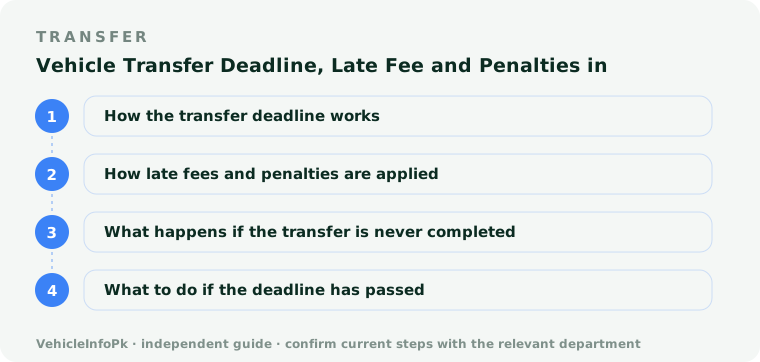
How the transfer deadline works
The deadline runs from the date of sale, not from the date of delivery or the date payment finishes. That is one reason the date on the sale letter matters: it is the reference point for the department when it decides whether the transfer was filed in time.
The period itself is set by each province and is measured in days from the sale. Some provinces publish a single period for all vehicles, while others treat commercial vehicles differently from private ones. Treat any number quoted by a dealer as a rough guide and confirm the current rule with your provincial excise and taxation department.
A late fee is a cost, not a punishment to be worked around. The cheapest way to deal with the deadline is to file the transfer within it. If the period has already passed, pay the charge, complete the transfer and stop the exposure from growing.
How late fees and penalties are applied
| Situation | What the department normally does |
|---|---|
| Transfer filed within the period | Standard transfer charge only |
| Transfer filed after the period | Standard charge plus a late fee calculated under the province's schedule |
| Several years of delay | Late fee plus any token tax arrears that built up in the seller's name |
| Vehicle found with an unmatched possession record | Penalty under traffic or excise rules, and the transfer still required |
The late element is usually calculated as a charge per period of delay rather than as a percentage of the vehicle's value, though provinces differ on the method. Because the schedule changes, ask the department to state the current calculation before you pay, and ask for the receipt to show the transfer charge and the delay charge separately.
What happens if the transfer is never completed
Both parties stay exposed, in different ways, for as long as the record shows the old owner.
The seller keeps the liability. Challan notices, token tax demands and any trace connected to the vehicle arrive in the seller's name. A sale letter helps explain the situation, but it does not stop notices that are generated automatically from the registration record. Sellers also find the vehicle still counted against them when they register or transfer another one.
The buyer holds an asset they cannot prove is theirs. Without a record in their name, the buyer cannot sell the vehicle on, cannot obtain a fitness certificate as the owner, and cannot resolve a challan or a token tax query raised against someone else's registration. Insurance claims are also harder, because the policyholder and the registered owner differ.
The delay compounds. Every year the file stays open adds token tax periods to clear and increases the delay charge. The exposure grows in both directions at the same time.
What to do if the deadline has passed
- Reconstruct the sale evidence: the signed sale letter with its date, and proof of payment.
- Check the vehicle's current token tax position and any challans recorded against the registration.
- Attend the registering authority together and ask for the current calculation of the transfer charge plus the delay charge.
- Pay, complete verification, and collect the updated registration record in the buyer's name.
- Both parties keep a copy of the receipt and the updated record.
Where the seller has moved on and cannot be traced, the buyer's options narrow considerably. A complete chain of sale letters leading back to the registered owner is the strongest position; without one, the remedy lies in a complaint or civil claim rather than at the transfer counter.
Ask your provincial department to state the current deadline and the delay charge that applies to your file, then complete the transfer even if the period has passed. Closing the gap costs one visit; leaving it open costs every year it remains.
Keep reading
Vehicle Transfer of Ownership Process in Pakistan: Step by Step
Vehicle transfer of ownership in Pakistan runs through sale letter, application, verification, fee and record update. Confirm your province's current fee first.
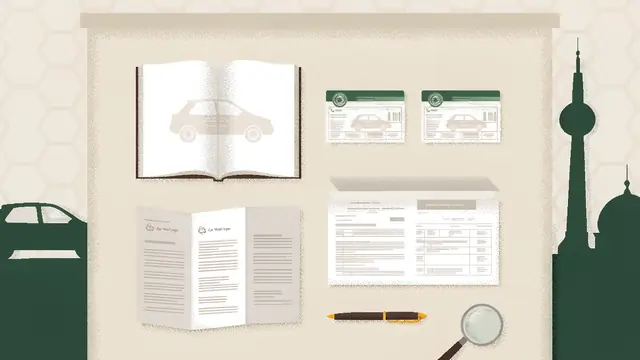
Documents Required for Vehicle Transfer in Pakistan
Documents required for vehicle transfer in Pakistan: registration book, CNIC copies, sale letter, token tax clearance. Check your province's checklist.
Vehicle Transfer Charges in Pakistan: How the Total Is Worked Out
Vehicle transfer charges in Pakistan combine a transfer fee, stamp duty, document issue and dues. See how the total varies and confirm it before paying.