
Verification
Vehicle Verification for First-Time Buyers: When to Check and What
Key takeaways
- Run two checks: before the booking amount and again before paying the balance
- Compare chassis and engine stamps yourself, in daylight, against the book
- Original registration book only, and the owner name must match the seller's CNIC
- Leave if the numbers fail — do not accept a discount instead of an explanation
Run your verification before any money changes hands, not after. As a first-time buyer in Pakistan, the sequence matters more than the individual checks: verify the record before paying a booking amount, verify it again before handing over the balance, and match the chassis and engine numbers before the vehicle leaves the seller's possession. Skipping either stage leaves you holding a vehicle whose record still belongs to somebody else.
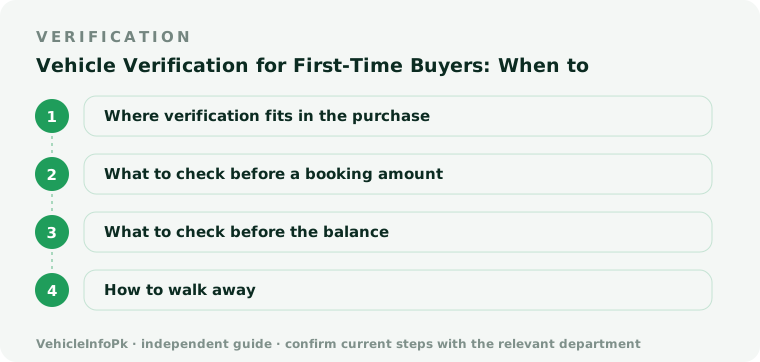
Where verification fits in the purchase
A used vehicle purchase moves through four moments, and verification has a different job at each one.
- First viewing. Photograph the plate and the chassis stamp. Nothing else is needed yet, and you should not agree to anything.
- Before a booking amount. Run the full record check on the registration number and compare it to what the seller told you.
- Before the balance. Re-run the check, confirm tax status, and match every number on the vehicle against the registration book.
- After paying, before driving away. Complete the transfer paperwork immediately, then confirm months later that the record carries your name.
Two checks, not one. A single verification at the beginning can go stale while negotiations drag on, and problems created during that window — a fresh challan, a second buyer appearing — will not show in your earlier result.
What to check before a booking amount
A booking amount is small but psychologically binding, so do the cheap work before you part with it. Nothing in this stage requires the seller's cooperation beyond the registration number, which is visible on the plate anyway.
- The make, variant and engine capacity on the record, compared against what is advertised.
- The owner name recorded against the vehicle, compared against the seller's CNIC.
- The registration city, because that determines which provincial authority holds the record and where a transfer has to be filed.
- Whether the vehicle is recorded as a commercial or private vehicle, since the fitness and tax obligations differ.
Anything that contradicts the seller's description here — a different year of manufacture, an owner who is not the person standing in front of you, a commercial classification the seller never mentioned — is worth asking about directly. The answers are informative even when they are innocent.
What to check before the balance
At the balance stage you are committing most of the money, so the standard goes up. This is where you stop relying on the seller's account of anything.
| Check | How you do it | Why it matters now |
|---|---|---|
| Chassis number | Stamp on the frame vs registration book | Confirms the vehicle matches the record |
| Engine number | Stamp on the block vs registration book | Flags a replaced engine that was never recorded |
| Token tax status | Provincial portal or excise office statement | Unpaid years become your liability |
| Seller's CNIC | Compare to owner name on the record | Confirms authority to sell |
| Outstanding challans | Where the province shows them on the record | Arrears follow the vehicle |
| Fitness certificate | Paper copy plus expiry date | Required for commercial and older vehicles |
Do the chassis comparison yourself, in daylight, with the book open in your own hands. It takes two minutes and it is the single check that cannot be satisfied by a photograph or a screenshot.
Ask for the original registration book, not a copy, and check that the owner page carries the details shown in the record. A seller who only produces photocopies, or whose book is "with a relative", should be treated as unfinished business rather than an inconvenience.
How to walk away
Walking away is cheapest before you explain why. You do not owe a seller a debate about their vehicle, and you do not strengthen your position by negotiating over a record you cannot confirm.
- Use a neutral line: the numbers do not line up with the record, so I am going to pass.
- Do not accept a reduced price as a cure for a mismatched chassis number or an owner who is not the seller. Those are not pricing problems.
- If you have already paid a booking amount, ask for it back in writing and keep the message. Whether it is refundable depends on what you agreed, so read anything you signed before assuming either way.
- Where the numbers do not match and you suspect the vehicle itself is questionable, take what you found to the provincial excise and taxation department rather than resolving it privately.
First-time buyers lose money mainly through momentum — the feeling that backing out is rude. Plenty of vehicles are available, and the one you can verify today is always better than the one you have to argue about later.
Start with the registration number check on your own screen tonight, before you message the seller again, and move the money only after every figure in that table lines up.
Keep reading
How to Verify Vehicle Ownership Online in Pakistan
Verify vehicle ownership online by registration number: see what the provincial lookup returns, which fields to match, and what the result means.
How to Verify a Used Car Before Buying in Pakistan
Before you pay for a used car: documents, engine and chassis number matching, verification lookup, token tax status, seller CNIC and sale letter.
Which Documents and Numbers You Need Before a Vehicle Verification
Vehicle verification needs your registration number, owner CNIC and chassis number. See why each is required and what to do if one is missing.