
Transfer
What Happens If a Vehicle Transfer Is Never Completed in Pakistan
Key takeaways
- Until the transfer is registered, the ownership record still names the seller.
- Challans and token tax arrears are pursued against the recorded owner.
- A buyer holding only a sale letter cannot sell or transfer the vehicle later.
- Most stalled transfers are fixed by completing the existing file jointly.
If a vehicle is sold and the transfer of ownership is never completed, the excise and taxation department record continues to name the seller as owner, and that record decides who is pursued for challans, unpaid token tax and any later enquiry involving the vehicle. The buyer gets possession but not legal ownership, which blocks the next sale, complicates an insurance claim and weakens their position if the vehicle is recovered after an incident. This guide sets out what each side is actually exposed to and how to get a stalled transfer moving again.
The record still names the seller
Everything else follows from one fact: until the transfer is registered, the department, the traffic authorities and the police all work from the same ownership record, and it still carries the seller's name and CNIC.
- Correspondence goes to the seller. Notices, e-challans and tax demands are raised against the recorded owner.
- The buyer has no standing. Without a completed transfer, the buyer cannot show that they own the vehicle, whatever cash changed hands.
- The sale letter is limited. A signed sale letter is evidence of an agreement between two parties. It does not update the government record and does not replace a registered transfer.
Challans and token tax after the sale
Traffic challans are issued against the registration number and then traced to the recorded owner. Practical problems follow quickly.
- Challans land on the seller. Fines recorded against the vehicle after the handover are still pursued against the person named on the record, who then has to show that the vehicle had already been sold.
- Token tax arrears accrue. Unpaid annual tax keeps accumulating against the registration, and arrears complicate the eventual transfer for both sides.
- Clearing someone else's dues. Because the transfer usually requires dues to be settled, whichever party attends to clear the record may end up paying for a period that was not theirs. Agree this in writing.
- Verification blocks. Outstanding amounts can surface later at a fitness inspection or at any check where the vehicle record is pulled up.
Why the buyer cannot sell or transfer it later
Transfer is a chain. Each registered owner must be able to show their own entitlement to pass the vehicle on, which is why a gap in the chain stops everything downstream.
- To transfer, the applicant must be the recorded owner, or hold a properly registered transfer in their own name.
- A buyer holding only a sale letter cannot file as owner, because the department's record does not recognise them.
- Any accumulated arrears and penalties must be settled before the chain can move.
- Until all earlier links are registered, the vehicle is effectively unmarketable, and its resale value reflects that.
A vehicle bought with a gap in its ownership chain is one of the most common reasons a later transfer stalls. Check the record names the seller before any money changes hands.
Insurance and recovery difficulties
An insurance claim is assessed against the insurable interest of the person claiming. A buyer whose name is not on the registration record, and who has no policy transferred into their name, can find a claim questioned or delayed. Where a vehicle is recovered by police after an incident, release is arranged with the recorded owner, which leaves an unrecorded buyer relying on the seller's co-operation. The same gap affects anything that requires proof of ownership: financing, a route permit for commercial use, or a fitness certificate.
How to unblock a stalled transfer
- Gather what exists. Both CNICs, the registration book or smart card, the sale letter or deed, any payment proof, and the application reference if one was filed.
- Check the current record. Confirm who is shown as owner and what dues are outstanding before approaching anyone.
- Contact the other party. Most stalls are administrative: a missing signature, an absent party, or an unclear agreement on who pays the dues. Resolve these together first.
- Approach the registering office. Where a file was filed and never progressed, the office that received it can trace the application against its reference.
- Where one side cannot be found or will not co-operate. Take advice on the remedies available against a seller who refuses to complete a transfer, rather than continuing to use a vehicle you cannot lawfully register.
- Complete and record it. Once the transfer is registered, both sides should keep the updated document and the payment receipts.
Treat the transfer as part of the sale, not paperwork to be handled later. Check the ownership record names the seller before paying, file the transfer promptly with both parties present or properly represented, and keep the payment proof together with the application reference until the record shows the new owner.
Keep reading
Vehicle Transfer of Ownership Process in Pakistan: Step by Step
Vehicle transfer of ownership in Pakistan runs through sale letter, application, verification, fee and record update. Confirm your province's current fee first.
Documents Required for Vehicle Transfer in Pakistan
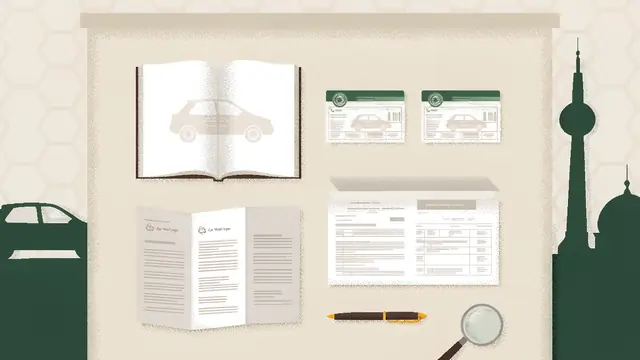
Documents required for vehicle transfer in Pakistan: registration book, CNIC copies, sale letter, token tax clearance. Check your province's checklist.
Vehicle Transfer Charges in Pakistan: How the Total Is Worked Out
Vehicle transfer charges in Pakistan combine a transfer fee, stamp duty, document issue and dues. See how the total varies and confirm it before paying.