
Traffic Rules
Seat Belt and Helmet Rules in Pakistan: Requirements for Drivers, Passengers, Children and Motorcyclists
Key takeaways
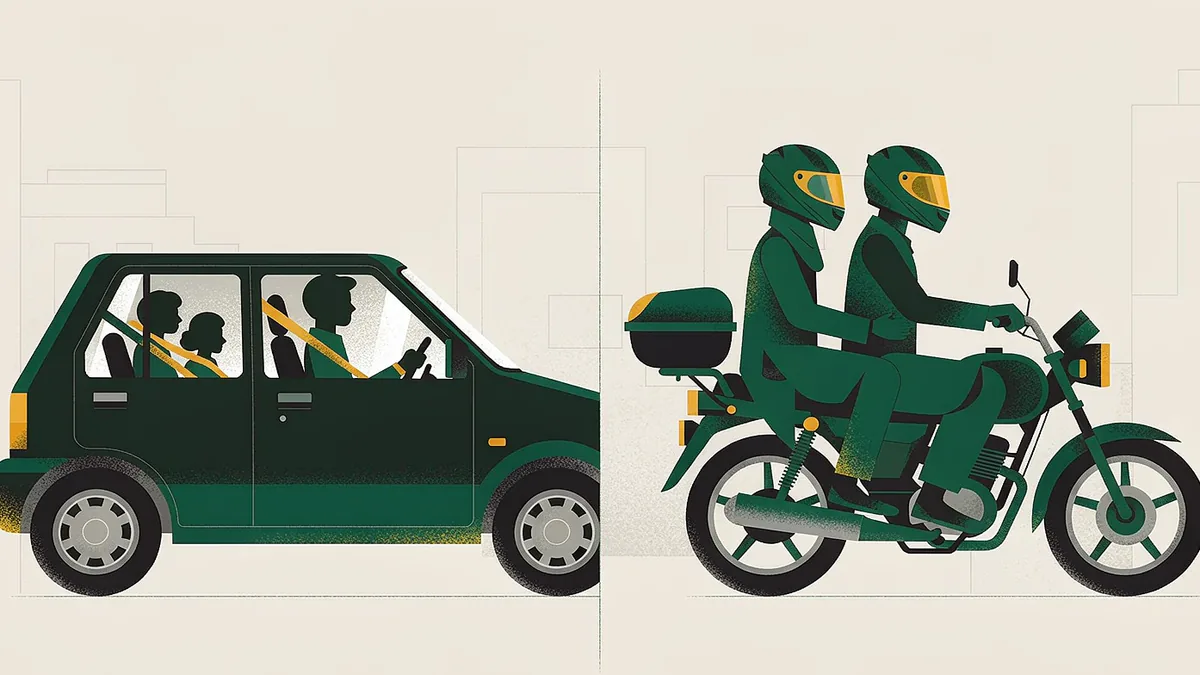
- Drivers and front passengers are expected to wear a seat belt at all times.
- Children should not sit in the front seat or be carried on a lap.
- Motorcyclists and pillion riders both need a proper fastened helmet.
- Belts must sit on the hips and shoulder; helmets must be strapped on.
Seat belts are required for drivers and front-seat passengers, and helmets are required for motorcyclists and their pillion riders, under Pakistan's traffic rules. These two requirements are among the most frequently enforced traffic provisions in the country, and they are also the two that reduce the severity of injuries most directly. Wearing them correctly matters as much as wearing them at all.
Seat belts for drivers and front passengers
The driver is responsible for wearing a seat belt, and under current enforcement practice the front-seat passenger is expected to wear one too. The belt must be worn properly: the lap portion across the hips, not the stomach, and the shoulder portion across the chest and collar bone, not tucked behind the back or under the arm.
- Fasten the belt before moving off, not after joining traffic.
- Check that the belt retracts smoothly and latches firmly; a belt that will not latch is a defect to repair.
- Never share one belt between two people.
- Do not use clips or devices that hold the belt slack — they remove the protection the belt is there to provide.
Provincial traffic police set and revise the exact requirements and penalties, and enforcement intensity varies between cities and between provinces. Treat the belt requirement as applying to every occupant in a seating position fitted with one.
Children and rear passengers
Children need particular care. A child should never sit in the front seat, where an airbag deploying in a collision can cause serious injury, and a young child should never be held on an adult's lap — in a crash, no one can hold on to a child. Where rear seat belts are fitted, older children should use them with the lap portion on the hips and the shoulder portion on the shoulder rather than across the neck.
Age-appropriate child restraint seats are the safest option where the vehicle has the fittings for them, and they should be installed according to the manufacturer's instructions. Where rear belts are fitted, rear passengers should wear them; the habit costs nothing and the protection is real.
Helmet rules for motorcyclists
Motorcyclists and pillion riders are expected to wear a helmet. A helmet only works if it is the right kind and is worn properly.
- Use a proper protective helmet rather than a cap, a hard hat or a decorative shell.
- Fasten the strap so the helmet cannot be pulled off by hand; an unfastened helmet comes off in the first impact.
- Choose a helmet that sits level on the head, covers the forehead and does not slide when you move your head.
- Replace a helmet after any significant impact, even if the damage is not visible.
- Carry a helmet for the pillion rider, not only for the rider.
Why these rules exist
The safety reasoning is straightforward. A seat belt holds the occupant in place during a collision, stopping them from being thrown into the dashboard, the windscreen or another passenger, and it spreads the force of the impact across the strongest parts of the body. It also keeps the driver at the controls, which is often what allows them to steer away from a worse outcome.
A helmet protects against head injury, which is the leading cause of death and long-term disability in motorcycle collisions. Motorcyclists have no bodywork, no crumple zone and no restraint around them, so the helmet is the single piece of equipment standing between the rider's head and the road.
| Road user | Requirement | Common mistake to avoid |
|---|---|---|
| Driver | Wear the seat belt at all times | Clipping in behind the seat to silence the warning |
| Front passenger | Wear the seat belt | Placing the shoulder strap under the arm |
| Child passenger | Age-appropriate restraint, not the front seat | Carrying a child on an adult's lap |
| Motorcycle rider | Protective helmet, strap fastened | Riding with the strap loose or unclipped |
| Pillion rider | Protective helmet as well | Only the rider wearing one |
Check your belts and helmets today: confirm every belt in the vehicle latches and retracts, and confirm each family member who rides has a helmet that fits and fastens properly.
Keep reading
Traffic Challans in Pakistan: What Triggers One, How to Check and Pay an e-Challan, and How to Dispute a Wrong Entry
Understand how traffic challans work in Pakistan: what triggers an e-challan, how to check your vehicle or licence, how to pay and how to dispute one.
Documents to Carry While Driving in Pakistan: Licence, Registration, Insurance, Token Tax and What to Do If One Is Lost
Which documents Pakistani drivers should carry: licence, registration, insurance, token tax proof, fitness certificate and the right way to replace a lost one.
Traffic Rules in Pakistan Every Driver Should Know: Signalling, Speed Limits, Right of Way and Mobile Phones
The core traffic rules in Pakistan explained: signalling, lane discipline, speed limits, roundabout right of way, pedestrian crossings and mobile phone use.