
Token Tax
Token Tax vs Road Tax in Pakistan: Are They the Same Charge?
Key takeaways
- Road tax is an informal label; your challan names the charge in official terms.
- Token tax is annual, while registration and transfer costs are one-off.
- Fitness, permits and insurance renew separately from the annual vehicle tax.
- Always read the charge head and period before paying any vehicle demand.
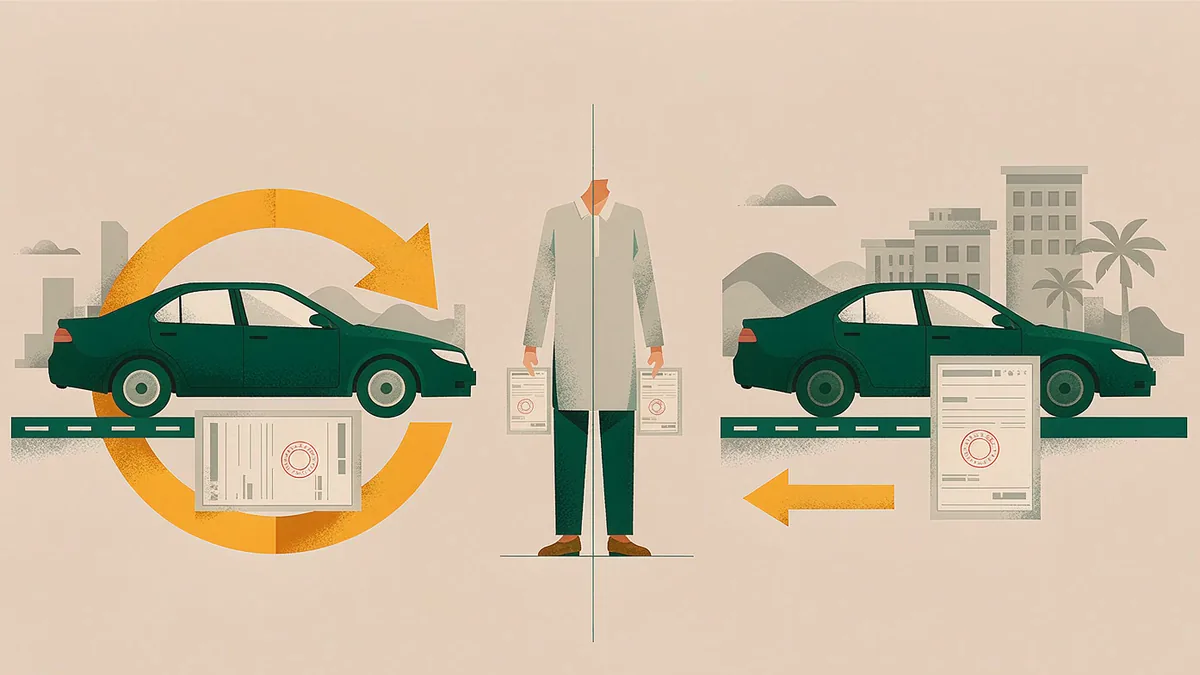
In Pakistan, token tax and what people loosely call road tax generally point to the same annual provincial charge, and there is usually no separate fee labelled road tax on your challan. The confusion is understandable, because "road tax" is a common informal term used for the annual charge, and sometimes for the whole bundle of road-related costs an owner pays. This guide separates the two words, sets out which vehicle charges are annual and which are one-off, and lists what else an owner typically pays beyond token tax.
What token tax covers
Token tax is the annual charge levied by the provincial excise and taxation department for keeping a vehicle registered and legally usable on the road. It is assessed once a year, it carries a period on it, and it is tied to the vehicle rather than to the driver. When you pay it, you are settling that year's charge for that registration number. Everything else you pay for the vehicle is something else, even when it appears on the same visit or the same receipt.
The charging basis depends on how the vehicle is classified: engine capacity bands for most private vehicles, and weight or seating capacity for goods and passenger vehicles. Each province publishes its own schedule, so the annual amount for the same vehicle differs between Punjab, Sindh, Khyber Pakhtunkhwa, Balochistan and the Islamabad Capital Territory.
Where the term road tax comes from
The expression road tax is widely used in conversation and in general writing as shorthand for the annual vehicle tax. In day-to-day Pakistani usage it means one of three things, and it helps to know which one someone means:
- The annual token tax itself. Most often, this is all that is meant.
- The annual charge plus its late fee. Some owners use the term for the whole amount demanded when a period has run past due.
- The general cost of keeping a vehicle legal. Occasionally people include fitness, permits and insurance under the same phrase.
The safest approach is to ignore the label and read the charge. Every challan or PSID names what it is for and which period it covers. If a demand does not state its head and period clearly, ask the department before paying rather than assuming it is the annual tax.
Annual charges and one-off charges
Mixing up recurring and one-off costs is the most common reason owners are surprised by a bill.
| Charge | Type | What triggers it |
|---|---|---|
| Token tax | Annual | Every year the vehicle stays registered |
| Fitness certificate | Annual or periodic | Commercial vehicles and older vehicles where required |
| Route permit | Annual or periodic | Vehicles operating for hire on a route |
| Motor insurance | Annual | Contract renewal; compulsory for certain vehicle classes |
| Registration and number plate | One-off | First registration of a new or imported vehicle |
| Transfer of ownership | One-off | Sale, gift or inheritance of the vehicle |
| Duplicate registration book or smart card | One-off | Loss, theft or damage of the document |
| Traffic challan | Per incident | A recorded traffic violation |
What else an owner pays
- Registration costs at purchase. A new vehicle carries its registration charge and plate cost when it is first entered on the register; nothing repeats here unless you register another vehicle.
- Transfer costs on sale. Moving ownership from seller to buyer is a one-off transaction with its own fee, and it usually requires any outstanding token tax to be cleared first.
- Fitness certification. Commercial vehicles, and in some provinces older private vehicles, must pass periodic inspection, which carries an inspection charge separate from token tax.
- Route permits. A vehicle carrying passengers or goods for hire normally needs its permit kept current alongside its tax.
- Traffic challans. Fines recorded against the vehicle for violations are paid separately and have nothing to do with the annual tax position.
- Insurance. Compulsory for some classes and voluntary for others, renewed annually with the insurer, not with the department.
Reading what you are being charged for
- Read the head of the charge. The description on the challan or PSID tells you whether this is the annual tax, a fee, a fine or a duplicate document charge.
- Check the period. An annual tax covers a stated year; a fine relates to a stated date; a duplicate document charge has no period.
- Check the amounts against each other. When several items appear together, ask for each one to be identified before you pay in a lump.
Treat token tax and the informal road tax label as the same annual provincial charge, and deal with every other item as its own separate cost. Before paying anything, read the charge description and the period on the challan, and confirm the current annual amount with your provincial excise and taxation department.
Keep reading
Token Tax in Pakistan: What It Is, Who Pays and How It Is Calculated
Token tax in Pakistan is the annual provincial road tax on a registered vehicle, charged by engine size or category. Rates differ in every province.
How to Pay Token Tax in Pakistan: Branch, Online Banking and Portal
Pay token tax in Pakistan by bank payment slip, online or mobile banking, or the provincial portal. Always keep the paid challan as proof of payment.
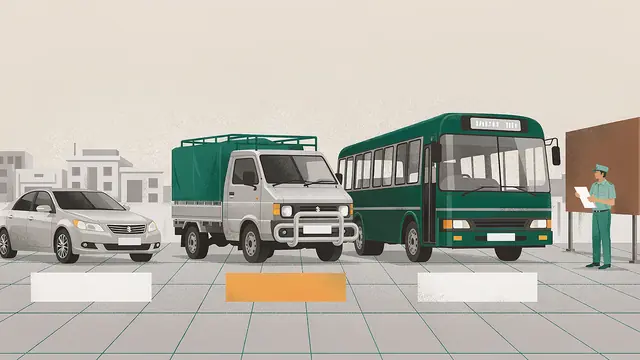
Token Tax Categories in Pakistan: Private, Commercial and Public Transport Vehicles
Token tax categories in Pakistan split private, commercial and public transport vehicles into separate provincial schedules with different annual rates.